This page: Different types of classic car and older vehicle - a wide choice to suit all tastes.
Types of classic vehicle.
So, dabbling with the an older vehicle appeals, but before going out and looking at potential purchases, it's worth putting some thought into the type of classic or vintage vehicle you are able to take on. Influencing the decision are a number of key considerations:
Budget. Decide on a realistic budget, and factor in a contingency fund to cover any unexpected breakages and/or repairs that may pop up.
Storage. Will your classic need to live outside, or do you have a cosy warm garage in which to park it and work on it?
Who will travel in it? If you have a family, perhaps a two-seater sportscar isn't going to be the best bet, while larger people will probably need a larger car rather than something of, say, MG Midget proportions.
What you will use it for? Leisurely jaunts in the countryside, for business promotion, towing a vintage caravan or maybe in historic competition?
Bearing these points in mind, here are some thoughts to ponder over when deciding on what type of classic or vintage machine appeals the most.
Sportscars.
There's no denying that sportscars are the 'glamour' corner of the road car market, and for a weekend 'toy' few could argue that having a pristine Austin-Healey or XK120 Jaguar tucked away for sunny drives out into the countryside isn't an unpleasant proposition. However a little focus is required if an appropriate car is going to be found. The aforementioned budgetary considerations will play a key role in deciding on a suitable sportscar to find.
At the more affordable end of the market, relatively, are sporty two-seaters from the likes of Triumph, MG, and Austin-Healey. Spitfires, Midgets, and Sprites all make for great little runarounds, economical to run, well supported by both specialists, forums, and clubs. Restoration projects start from a few hundred pounds, with up-and-running cars available for a few thousand upwards. Care is needed in buying a shiny example, as many examples will have passed through the hands of less skilled owners over the years, resulting in restorations of varying levels of quality hidden beneath a glossy paint finish, so again as with all purchases like this, go in armed with a sound understanding of the type's common faults, and areas that are regularly bodged rather than repaired correctly. Given that many sportscars have folding roofs, that tend to leak after a few years of service, steel floorpans and sills can suffer badly once exposed to damp carpets and sound-deadening over a period of time.
A modest budget doesn't necessarily mean that only a sporting car of the 1960s or 1970s will be in budget, as specials built on the running gear of once-common saloons can offer an affordable entrance into the world of pre-war sportscar motoring. Many Austin 7s and Ford 10s donated their running gear to the back-yard builds of one-off specials, and the practice continues to this day, with Austin 7 Ulster replicas continuing to be built by enthusiastic owners.
Move up the sportscar market and a new world of glamour, style and chic opens up before the researcher, and it's easy to be won over by stylish offerings from the likes of Jaguar, Aston Martin, Jensen, AC and Alfa Romeo to name just a few of the marques that will likely be encountered. Prices are understandably stronger, so the risks inherent with buying such a car mean that diving in at this level requires an even greater understanding of the market, and never more than now has the phrase 'going in with your eyes open' applied to the selection and purchase of a car.
As with the lower end of the market, there are sportscars from all eras to choose from, so again picking an era that is of most interest will help narrow down a search. Contenders from the 1970s and 1980s include the Jensen-Healey, Datsun 240Z, Triumph TR6 and Alfa Romeo Spider for example, and it could well be that cars of this era would be more suitable for regular use than say something built in years before then.
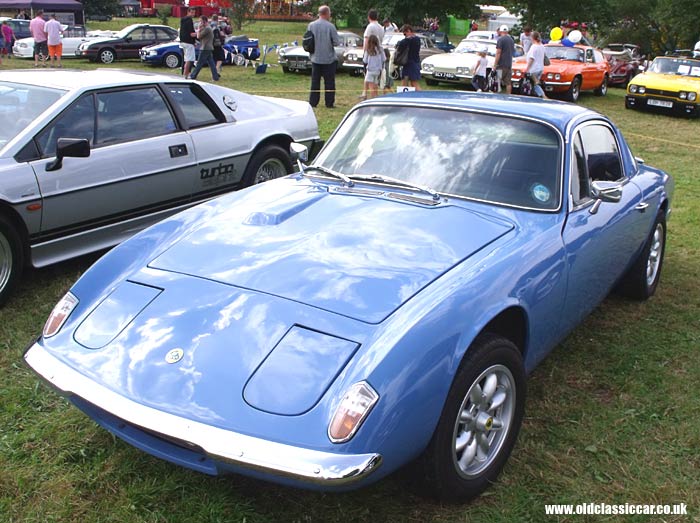
Candidates from the 1950s and 1960s include the aforementioned Austin-Healeys (100/4s, 3000s etc), Jensens, BMW 507s, Lotus Elan, Mercedes-Benz SLs, MGs (TF, MGA, MGB, MGC etc), Triumphs (TRs, Spitfires, GT6s), and an assortment of stunning Jaguars, ranging from XK120s right through to E-Types.
There were fewer sporting cars built in the 1940s, for obvious reasons, but go back to pre-war days and there are some gems to be had, which, if you're willing to regularly keep them in fine fettle and attend to their needs, can make for a very satisfying buy, although daily use of something this old won't be to everyone's tastes.
Many of the sportscars mentioned here are open-topped cars. If regular use is envisaged, or the car would have to live outside, then perhaps a tin-topped coupe is the better bet. The MGB and MGC for instance are both available in "GT", fixed-head form, while the GT6 with its smooth six-cylinder engine can be a more civilised proposition than its open-topped cousin, the Spitfire. Other sporting coupes worth a mention include the delectable BMW 3.0CSL (and relatives), the Reliant Sabre, Lotus Elan +2, Opel Manta, Ford Capri, MGA Coupe, Mercedes-Benz SLC, Sunbeam Alpine Harrington, and the AC Aceca. Prices for all these coupe offerings in good order are on the increase though, so a good compromise might be a convertible, but fitted with a factory hardtop. This way you get to stay dry when the weather is doing its worst, and on sunny days it can be removed and open-topped motoring once again enjoyed. This assumes that you have a helper willing to help you remove the roof, and somewhere safe to store it.
Saloons.
Saloon cars may not have the glamour of a sportscar, but are often the more practical proposition for many aspiring classic car owners. They leak less (usually), aren't draughty, are more secure to store belongings in, and are more suitable for outside storage than a roadster with its flimsy hood, and minimal security. Pound-for-pound a tin-top saloon tends to offer better value than a contemporary sportscar or drop-head saloon from the same manufacturer, so buying a really nice Hillman Super Minx for example will cost less than a middling convertible version of the same car, or a Sunbeam Alpine also from the Rootes Group stable. A mint A35 will cost significantly less than a Mk1 Sprite in average condition, yet shares most of the running gear and can easily be tuned to out-run a Sprite for some Q-car fun.
If 1970s cars are favoured, then there are many Fords (Escorts, Cortinas, Granadas etc), Vauxhalls (Victors, Vivas etc), Austins (Princesses, Maxis etc) to choose from, along with an array of automobiles from the likes of Morris, Hillman, and Jaguar to name but a few. The 1970s saw a large increase in the number of foreign-built cars being sold in the UK, and preserved BMW, Opel, Toyota and Datsun saloons can often be seen at shows. The downside to many 1970s saloons is that typically they're less well supported than their sporting cousins (apart from where components are shared), and tracking down replacement panels and trim can be more difficult than for older cars.
Going for a saloon of the 1950s or 1960s is perhaps the most painless (in theory) route into classic car ownership. Morris Minors, Austin A30s/A35s/A40s/A50s, Hillman Minxes and the like are still reasonably plentiful, parts are not usually wallet-breaking and both new and secondhand parts are, in the main, available for most of the popular types, although once again good usable trim is becoming scarce for all but the best-supported models (such as the Minor).
Not much more expensive to buy than the aforementioned classics, but pricier to run and fix, are the plusher saloons from the likes of Humber and Rover. The cost of dragging a poor example into good order keeps the values of leather and wood-appointed cars pegged down, with only the very best examples making good money. If I was looking for a regular-use saloon from this era, to use in towns, I'd probably go for an Austin Cambridge or a 1950s Minx, while if longer trips were regularly encountered then perhaps something with an overdrive gearbox, such as a Volvo 122S or a Jaguar, would be a less stressful option.
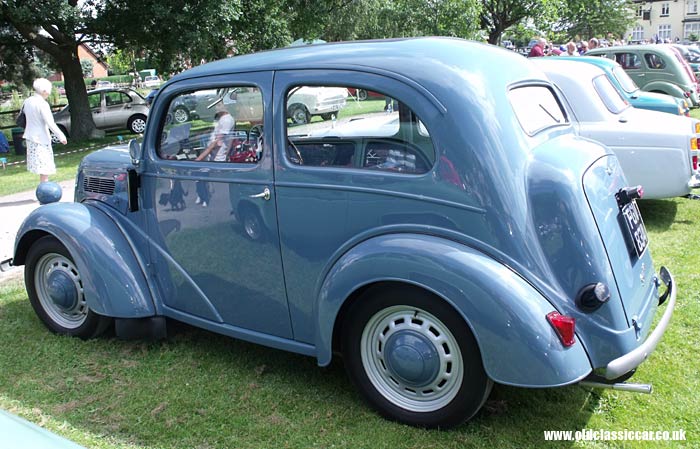
Going down the saloon route is also the most affordable way of getting into pre-war motoring. A pre-war Morris 8 or Austin 10 saloon can be picked up for 2500-3500 GBP in sound working condition, they won't cost much to run, and will be a hoot to drive in a way that no modern-car motorist would ever understand. Other possible candidates include the Austin 7 Ruby, Hillman Minx, Morris 10, Standard Flying 10 and Ford Model Y and Model C. Vintage, ie pre-1931, saloons tend to cost more and are more idiosyncratic than their late-1930s equivalents, and sourcing parts can take more diligent searching than for later models. Medium- and large-sized saloons are also available from this era, although are in some cases harder to find than their open-top relations, as the costs of restoring a sad saloon often far exceed the likely final value of the finished car. This has led to many a saloon being broken for parts, or chopped about and made into a pre-war "special" - some attractive, others less so.
Estate cars.
Anyone needing practicality from their classic may well decide to hunt down an estate car version of a classic. These encompass both factory-built estates, such as the SAAB 95 and the Triumph Herald estate, and those built by outside coachbuilders. The Friary conversion of the Vauxhall PA, and the Ford Mk2 Consul/Zephyr estates produced by Farnham, are two examples of 1950s cars being converted into estates. Go back further in time and quite a few cars and light commercials were transformed into "woodies". Practical, eye-catching, and often much rarer than their saloon relations, a classic estate can be an excellent choice. An article looking at this type of vehicle can be found on the Classic Estates & MPVs page.
Commercial vehicles.
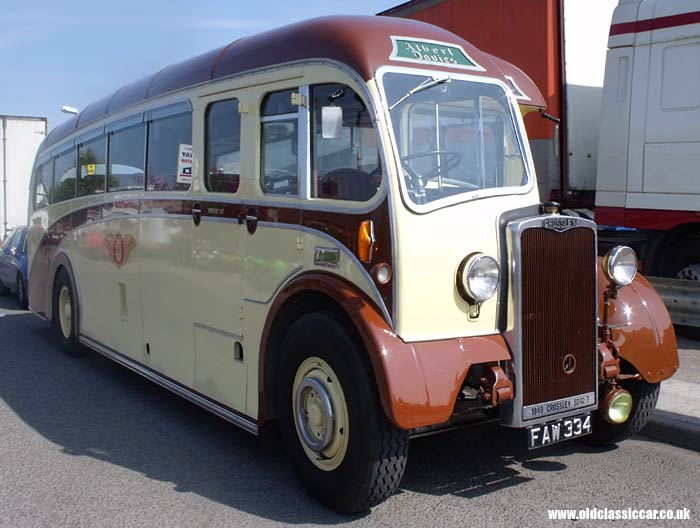
So how about an old commercial vehicle? The choice of old lorry is vast, although in reality only certain historic trucks are really useable regularly, most being ideally suited as weekend and show 'toys'. You can choose from large commercials (buses, heavy lorries, military, fire engines) or smaller ones (coaches, small - medium lorries, lightweight pickups) plus special-build vehicles such as ice cream vans, refuse wagons, racing car transporters, bread vans, mobile libraries, police vans, WW2 NAAFI canteens, ambulances, builders trucks and so on.
You really need to be 'in' to old wagons to buy a heavy truck, and then there are serious issues with storage to contend with. If you can't fit your prized London bus at home in the driveway, then you're going to have to fork out a significant amount of money on storage, that's assuming you can find somewhere that has the facilities to allow you to work on your chosen vehicle. Easier to live with are coaches and other commercial lorries that will fit at home. Pick up a copy of a historic commercial vehicle magazine and compare prices - that 5 ton Atkinson lorry may be yours in restored condition for 10k say, yet to buy a much smaller 10cwt van in equally well restored condition (say an E83W Ford) may relieve you of 9-12k easily, simply because more people are in a position to take on car-size vans and pickups. Start looking at Morris J vans and the asking prices for good examples are higher still.
However if you are fortunate enough to live on an idyllic farm in the middle of nowhere with plenty of empty buildings, then go for a proper-sized truck and get a (relative) bargain!
Popular small vans to consider are the Fords of the 1950s, either in 10cwt or 5cwt form (the latter sharing many components with contemporary Ford Pops), Bedford CA and HA vans, Morris J-Type (and similar JB and Austin 101), Morris Minor vans (Austin versions are available), Ford Anglia-based commercials, plus more oddball offerings from the likes of Jowett, Trojan, Reliant and others.
If you are capable of running something a little larger, then there are plenty of old trucks and public service vehicles available in wildly varying conditions - just remember that to restore an old bus, with all that wood and leatherwork, can cost a fortune. Examples of Albion, Atkinson, Seddon, ERF, Foden, Leyland etc are all available although age and condition will have a significant bearing on prices. Buyers looking for something a little more unusual could opt to hunt overseas for their next purchase - rarities (to UK eyes at least) such as those by Dodge, Mack, International, Opel, Chevrolet and others will make for an eye-catching exhibit at shows.
A downside with old commercials is that spares can be very difficult to locate, and are often not interchangeable with more commonly found road cars built by the same company - you have been warned. However, if you want to stand out at your local historic vehicle event, go commercial and take along something unique, to many a relief from the rows of MGB and Moggie Minors you're likely to encounter. Tips on this type of vehicle can be found in this Classic commercials article, while vans and pickups are looked at in more detail here.
Custom Search
Old Classic Car (C) R. Jones 2025. Content not to be reproduced elsewhere.