Vauxhall Velox LIX.
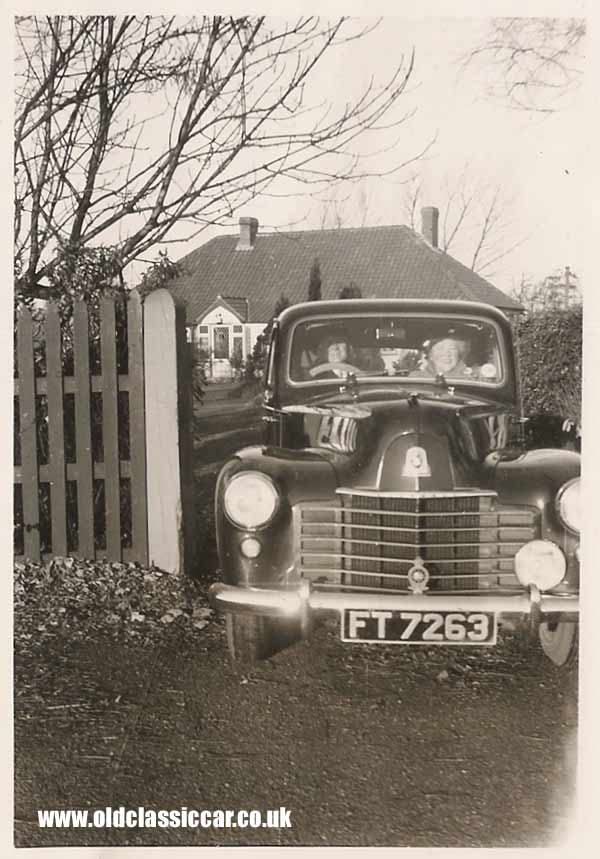
1. A post-war L-Type seen driving away from a 50s bungalow.
This page now features three photographs of the postwar Vauxhall saloon. The car in the first photograph is one of the post-war L-Type Vauxhalls, most probably a Velox although it could be a Wyvern. Can anyone say for definite which model FT 7263 is?
|
|
|
Sadly I have no clues as to where this photo was taken, so the location of this scene, featuring a classic Vauxhall exiting a driveway, with typical 1950s bungalow in the background, will remain unknown.
|
|
The L-Series Velox looks like a good example of the breed, in standard trim other than for a chunky steering wheel cover, large fog lamp and motoring organisation badge affixed to the front. As with most L-Type Vauxhalls, this one looks to be finished in black. The lack of leaves in the picture suggests that it was winter-time, the occupants look like they are well wrapped up too, it'll be a while before the heater in this Velox wafts some warmth through into the cabin.
|
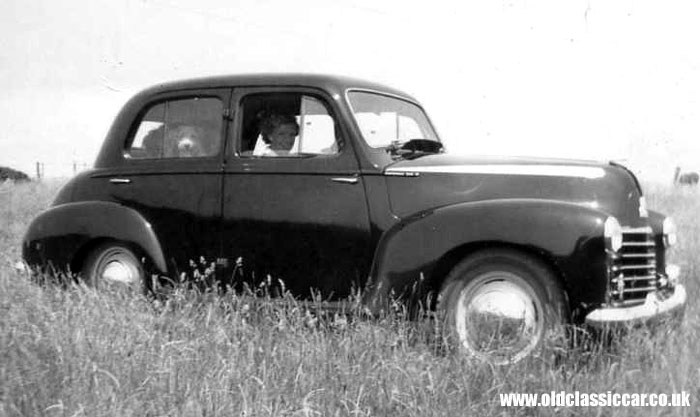
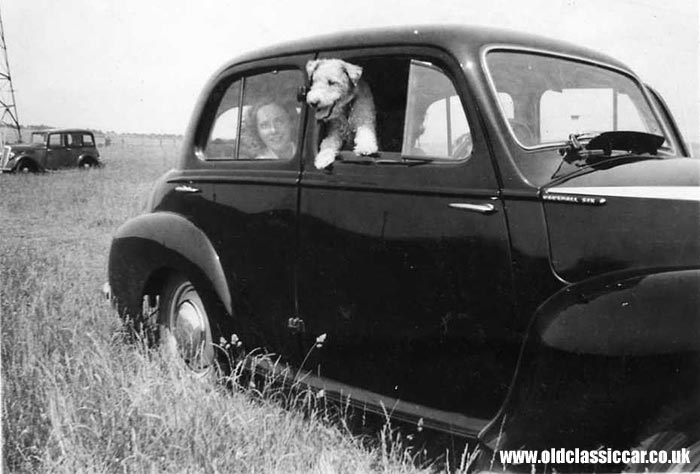
2. Two photos showing a Vauxhall Velox parked in a field.
Nigel kindly sent me these two photographs, showing a Vauxhall Six L-Type (ie a Velox) that he found in a family album. The close-up view shows the Vauxhall Six badge, which makes me think that this is a the 6 cylinder Velox, rather than the Wyvern.
|
|
|
|
The L Series Vauxhalls were introduced in 1948, either in Wyvern (1442cc) or Velox (2275cc) variants, replacing the
pre-war designed 10, 12 and 14 models that had been put back into production after the war. The L Series was a
leap forward in terms of styling, featuring headlamps incorporated into the front wings to give a much more modern
appearance. Front suspension was independent, and the 3 speed 'box was shifted via a column mounted lever.
|
|
A year into production and some revisions were brought in. The cars now had larger headlamps, and leather seats
were now featured on the (brief) options list.
|
|
This version of the Wyvern and Velox continued for just another couple of years, until the E-Series came on stream in 1951.
|
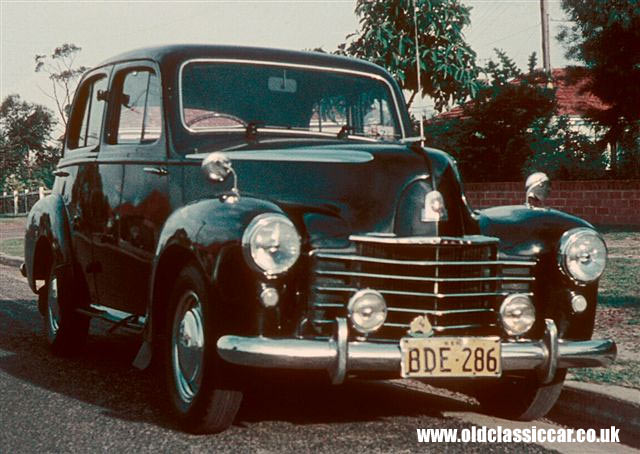
3. Keith's 1950 Velox.
Keith in Queensland dropped me a line, with some of his memories of the L-Type Vauxhall Velox and Wyvern saloons, as sold in Australia during the early 1950s, plus this colour photo showing his 1950 Velox.
|
|
"I was browsing your website recently and came across some photos of an L series Vauxhall Velox submitted by a Nigel. He was trying to ascertain the particular year of the vehicle. I owned a similar model for about 10 years and I'm certain it's a 1950 series. This series differed from the earlier model with the following modifications and features:
- 590x15 size tyres instead 550x16
- Front and rear bumper overiders
- Larger front headlamps.
- Separate parking lamps
- Rubber stone protectors at bottom fronts of rear guards.(This may have only applied to vehicles sold in Australia)
- Modified wheel support arms on front suspension units to accommodate wider tyres.
- Updated front suspension seals
- Modified front suspension shock absorber relief valve settings
- Modified king pins incorporating a singe ball swivel in lieu conventional thrust bearing arrangement
- Rear spring gaiters installed
- Gear linkages incorporate rubber bushings
|
|
The next model (1951) of this series sold in Australia differed very little from the 1950 version. The only difference that comes to mind was that instead of chromed metal window lifts it now had small rectangular pieces of glass bonded to the tops of the windows as grips.
|
|
The Wyvern model differed slightly from the Velox. It had plain wheel covers whereas the Velox had the word VAUXHALL pressed into the cover and picked out in red. Wyvern had only single acting rear shock absorbers and was devoid of bumper overiders. It only had 550x16 tyres/
|
|
The Velox and Wyvern were sold in Australia in two versions. One was the English model as shown in Nigel's photo, and the other based on the 1948 J series body which was made locally prior to WW2. It was fitted with L series guards bonnet and radiator grille which were imported from the UK. It was designated as an LIP model. The car that I owned travelled a total 105,000 miles and in that time the much maligned Dubonnet torsion bar front suspension was trouble free. Main problems were from the gearbox, gear shift linkage, tie rod ends and the appalling cable driven windscreen wipers and windscreen water leakage."
|
|
Keith Creevey, Toowoomba, Queensland, Australia.
|
4. A Velox seen on a European tour.
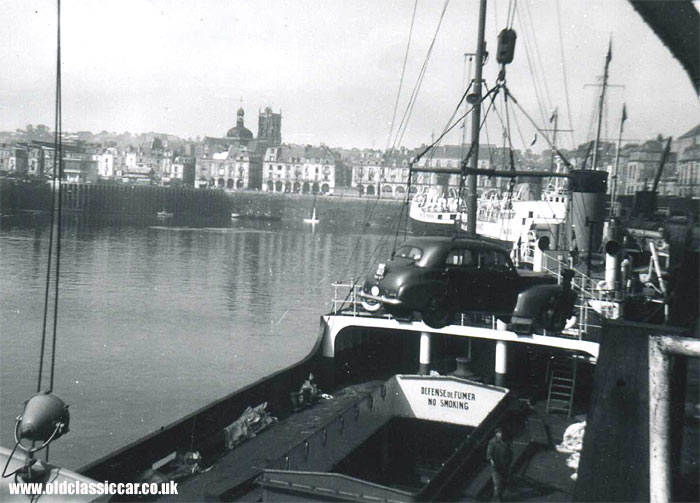
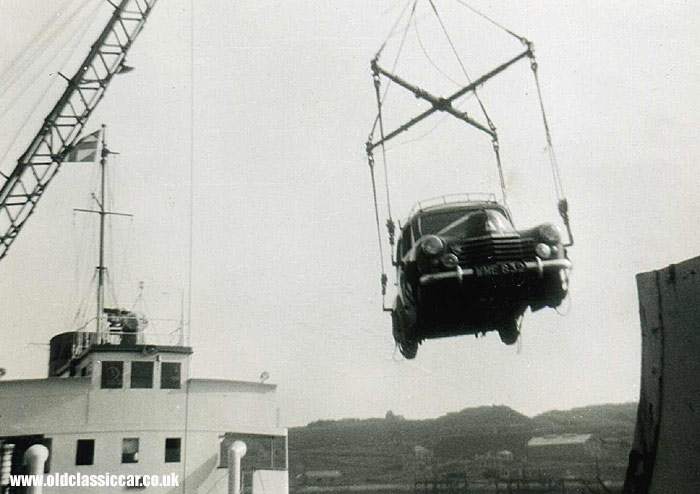
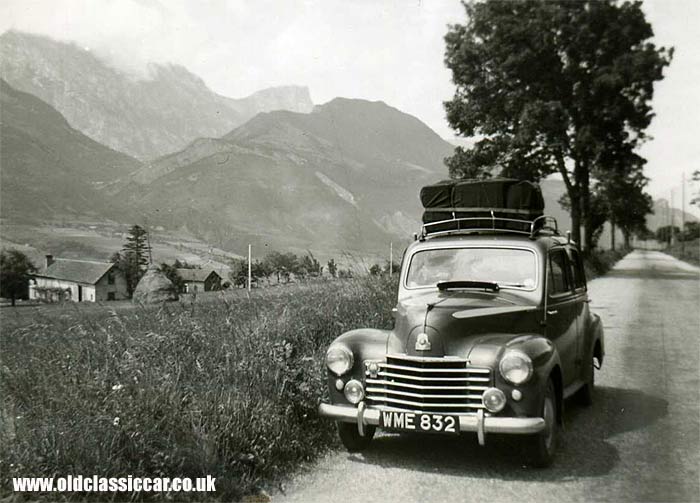
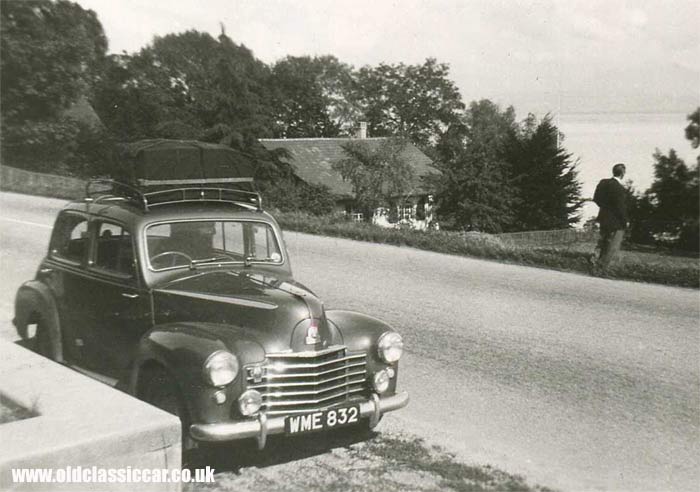
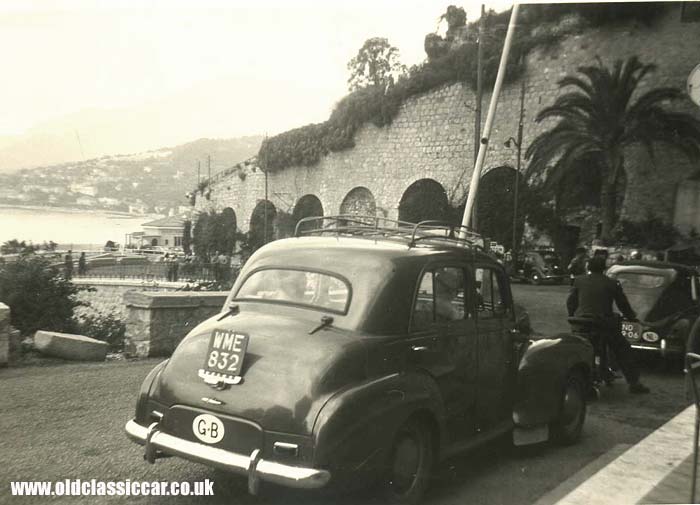
The following five photographs all feature a Vauxhall Velox on a tour of Europe during the 1950's. The car, registration WME 832, hails from the London area, WME dating it at sometime after June 1950. The first two photographs show the Velox being craned on board a ship - no roll on roll off ferries in those days! Note the buildings on the quayside in the background, and the Defense de Fumer / No Smoking sign on the ship. Considering his car is swinging high up in the air, the photos remain remarkably clear, so the Vauxhall's owner wasn't too nervous obviously.
|
| (Please click the thumbnail to view full-size image.) |
|
|
|
|
|
With the car back on land, the tour could continue. This next shot shows the Vauxhall Velox parked at the roadside, with an impressive vista in the background. Would anyone care to hazard a guess as the location of these shots? Switzerland or Austria perhaps here? The scuttle ventilator is open, so it must have been a mild day. Note the loaded luggage rack on the car's roof - in some shots it is empty, in others quite laden.
|
|
|
|
Another roadside shot, with one of the car's occupants seen surveying the view. Wisely this driver has opted for AA cover, I wonder if the Vauxhall completed the trip reliably?
|
|
|
|
The final photo of a Velox in this set shows the car parked up, with two passengers - one in front, the other in the rear - just visible inside the car. Does anyone recognise the car in front of the Vauxhall?
|
|
|
5. A similar Vauxhall but here in the UK.
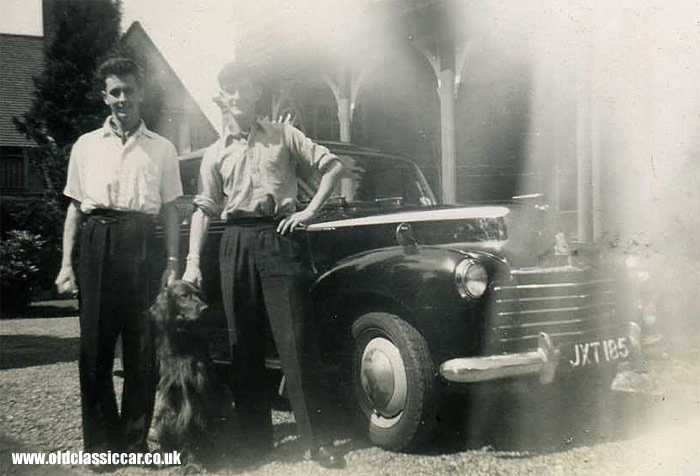
This next pairing feature a Velox registered as JXT 185, thus dating this London-registered car to post-July 1948. The first photograph shows two young gents stood alongside the L-Type Vauxhall, with their dog for company.
|
|
|
|
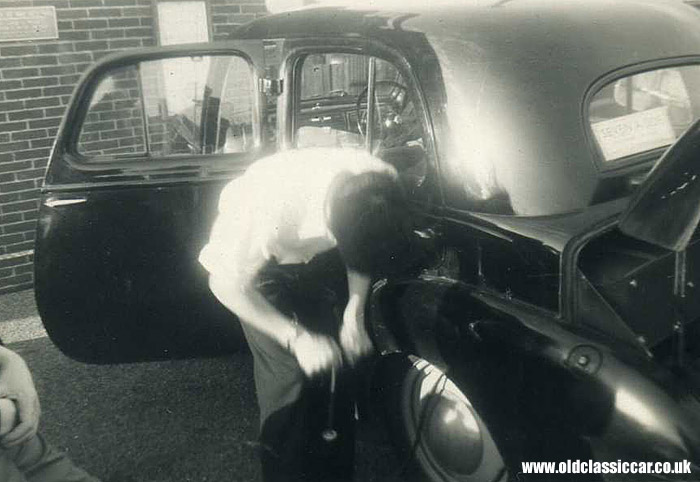
The second shot, which clearly shows the rear-hinged front doors of the Velox, sees one of the lads hard at work with a stirrup tyre pump, inflating the nearside rear tyre. A sign just visible in the car's rear window is advertising a "Seven-a-side" match.
|
|
Co-incidentally, both images are printed on Velox paper!
|
|
|
6. A gent stood with his Vauxhall Wyvern.
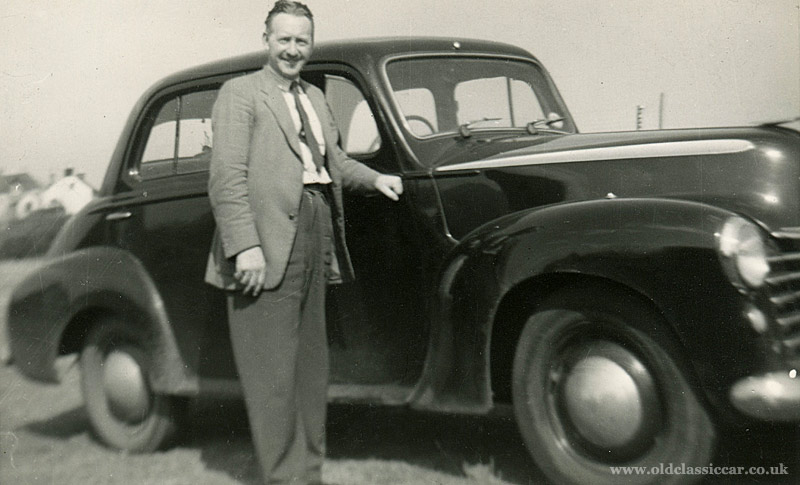
Next, another example of the L-Type Vauxhall, here I think the four-cylinder Wyvern. Maybe the gent in the photo was just in the process of heading out to buy a sponge, and a tub of Simoniz polish, to return the grubby Vauxhall to its shiny best!?
|
|
|
|
Return to Motoring Photographs Page 2.
|
Also see.
Here, a look at contemporary issues of The Vauxhall Motorist magazine, an in-house publication that regularly featured L-Types in it.
|