
Classic cars forum & vehicle restoration.
|
|
| Author |
Message |
Ray White

Joined: 02 Dec 2014
Posts: 7712
Location: Derby
|
 Posted: Thu Sep 24, 2026 9:44 am Post subject: Emissions question. Posted: Thu Sep 24, 2026 9:44 am Post subject: Emissions question. |
 |
|
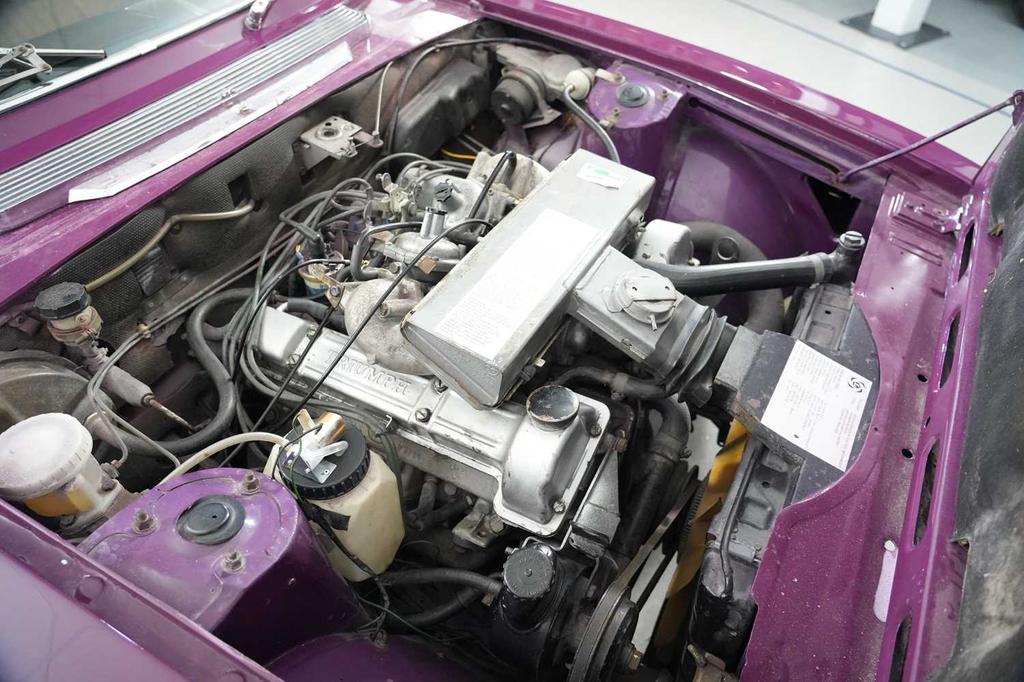
In this photo of a 1973 Triumph Stag engine bay it is clear that the air intake is separated from the grille. On closer inspection, the vacuum hose is missing from the flap motor. I am thinking this has been done for a purpose rather than just having been missed? .....but why?
My question is really more about how this emissions set up actually works?
I understand that there is a throttle operated spring loaded plunger in the side of the carb(s) that functions to open or close two ports (which I think may have something to do with float chamber ventilation?)
There is a vacuum pipe leading to a temperature sensor that works in conjunction with the aforementioned flap valve on the top of the air intake.
What I have never fully understood is how this emissions set up is supposed to work. If it operates as a kind of automatic choke (restricting or controlling air intake) then why is there also a manual choke fitted? ...or is that a later mod? I seem to remember these cars having a manual choke ...I simply can't remember.
Maybe someone who knows these cars better can remind me?
Thank you for your patience.
. |
|
| Back to top |
|
 |
ukdave2002
Joined: 23 Nov 2007
Posts: 4421
Location: South Cheshire
|
| Posted: Thu Sep 24, 2026 10:59 am Post subject: |
|
|
Stags have a manual choke, the flap on the air intake is designed to keep the air intake temperature above 20 degrees, as you mention the vacuum pipe is missing, over time the diaphragm in the valve can leak, possibly why someone has removed it and presumably plugged the other end?
If its a US Stag, it may have additional emissions control, these may have included porting excess fuel fumes into something like a carbon canister, from both the tank and float chamber, this relates to the control on the float chambers that you mention, I have seen the mod on some UK built cars that went to the US, but honestly don't know if the Stag had them.
Incidentally the Stag was a massive failure in the US, with all the overheating issues that we had in the UK magnified many times over! |
|
| Back to top |
|
|
Ray White
Joined: 02 Dec 2014
Posts: 7712
Location: Derby
|
| Posted: Thu Sep 24, 2026 1:47 pm Post subject: |
|
|
Thank you Dave. You clearly explain how the operation works... but what I would like to know is how does the flap valve help with emissions?
Incidentally, I understand this is a U.K. car. I presume, therefore, that the float chambers are vented straight to the atmosphere? |
|
| Back to top |
|
|
ukdave2002
Joined: 23 Nov 2007
Posts: 4421
Location: South Cheshire
|
| Posted: Thu Sep 24, 2026 2:20 pm Post subject: |
|
|
| Ray White wrote: | but what I would like to know is how does the flap valve help with emissions?
Incidentally, I understand this is a U.K. car. I presume, therefore, that the float chambers are vented straight to the atmosphere? |
I can only presume that because the air intake temperature is" Regulated" it should be possible to more accurately set the carburettors, which in turn means better efficiency and less emissions? Clearly it's not going to work straight away on a freezing cold day, or a boiling hot one!
I'm pretty sure the float chambers on my Stag simply vent to the atmosphere, I certainly don't have any additional filters or carbon canisters.
Last edited by ukdave2002 on Thu Sep 24, 2026 2:26 pm; edited 1 time in total |
|
| Back to top |
|
|
alastairq
Joined: 14 Oct 2016
Posts: 2264
Location: East Yorkshire
|
| Posted: Thu Sep 24, 2026 2:21 pm Post subject: |
|
|
| Quote: | | but what I would like to know is how does the flap valve help with emissions? |
Might it be a high tech [for the era?] version of the old fashioned metal air filter boxes, that had moveable [or, 'adjustable] air intake positions? With long 'snouts?'
Owners/drivers would be advised [in the manuals] to move the position of the 'snout' of the air filter box, to various other positions according to the ambient outside temperatures [time of year, for auld farts]
Thus accessing warmer air during wintertime...and cooler airflows during summer months?
This ability to influence intake air temperatures must have had a positive effect on emissions, surely?
Much like in the more modern motors, where the intake air temperature is measured, and appropriate signals sent to the ECU?
_________________
Dellow Mk2, 1951 built, reg 1952.
Fiat 126 BIS
Cannon special [1996 registered. Built in 1950's]
----------------------------------------------
Ford Pop chassis, Ashley 1172 bodyshell, in pieces. |
|
| Back to top |
|
|
V8 Nutter
Joined: 27 Aug 2012
Posts: 609
|
| Posted: Thu Sep 24, 2026 2:24 pm Post subject: |
|
|
| My 1970 Cadillac has a similar arrangement. From a cold start a heat sensitive valve diverts vacuum to a valve that opens a door beneath the air cleaner that allows hot air from above the exhaust manifold into the engine to make warmup quicker and keep the emissions. As soon as the engine warms up the valve closes. At least that is the theory but after a few years it ceases to work, I don't think it made a great deal of difference. An MOT tester checked the emissions on the Cadillac just out of curiosity. No problems with the pre 1993 standards, and not quite scraping through the post 1994 standards. American emissions standards vary from state to state California being the strictest |
|
| Back to top |
|
|
Ray White
Joined: 02 Dec 2014
Posts: 7712
Location: Derby
|
| Posted: Thu Sep 24, 2026 4:10 pm Post subject: |
|
|
Some interesting replies. Thanks everyone.
I wonder why on this car the air intake has not been connected?
I can see how the flap motor might have been giving trouble and was perhaps ditched...but the air intake needs fresh air, surely? |
|
| Back to top |
|
|
alastairq
Joined: 14 Oct 2016
Posts: 2264
Location: East Yorkshire
|
| Posted: Thu Sep 24, 2026 4:46 pm Post subject: |
|
|
| Quote: | | but the air intake needs fresh air, surely? |
Technically, not all the time.....[start-up, warm-up, arctic conditions outside, etc]
Not so much 'fresh' air, as a need for 'cold' air once warmed up...Cold air contains more oxygen, I believe..
Same with moist air....engines produce 'more' power using 'moist' air...
That's why a car engine seems to run 'better' on wet or foggy days? Nothing to do with spending half the time skidding along.
Hence the water vapour injection phenomenon?
_________________
Dellow Mk2, 1951 built, reg 1952.
Fiat 126 BIS
Cannon special [1996 registered. Built in 1950's]
----------------------------------------------
Ford Pop chassis, Ashley 1172 bodyshell, in pieces. |
|
| Back to top |
|
|
ukdave2002
Joined: 23 Nov 2007
Posts: 4421
Location: South Cheshire
|
| Posted: Thu Sep 24, 2026 6:36 pm Post subject: |
|
|
| Ray White wrote: | | but the air intake needs fresh air, surely? |
The engine will get fresh air whether the duct is connected up to the rad side or not, the only difference will be temperature of the incoming air. |
|
| Back to top |
|
|
Ray White
Joined: 02 Dec 2014
Posts: 7712
Location: Derby
|
| Posted: Thu Sep 24, 2026 7:00 pm Post subject: |
|
|
| ukdave2002 wrote: | | Ray White wrote: | | but the air intake needs fresh air, surely? |
The engine will get fresh air whether the duct is connected up to the rad side or not, the only difference will be temperature of the incoming air. |
Also, what Alastair says. I have always thought the same about damp cold air being better. |
|
| Back to top |
|
|
ukdave2002
Joined: 23 Nov 2007
Posts: 4421
Location: South Cheshire
|
| Posted: Fri Sep 25, 2026 8:11 am Post subject: |
|
|
| alastairq wrote: | | Cold air contains more oxygen, I believe.. |
That's because by volume there will be an increase in oxygen proportional to a decrease in temperature, same reason that until STA was introduced several years ago, where possible we used to fill up with fuel on cold days and try and avoid filling up on hot days!
Although because the fuel is stored in underground tanks where temp variation is less volatile, I suspect the actual gain was very small!! |
|
| Back to top |
|
|
|
|
You cannot post new topics in this forum
You cannot reply to topics in this forum
You cannot edit your posts in this forum
You cannot delete your posts in this forum
You cannot vote in polls in this forum
|
php BB powered © php BB Grp.
|
 FAQ
FAQ Search
 Memberlist
 Usergroups
 Profile
 Log in to check your private messages
 Log in



